

You measure hard-to-track channels like podcast and CTV by layering methods instead of chasing a perfect pixel: promo codes and vanity URLs for direct-response signals, post-purchase surveys for self-reported discovery, geo-based lift tests for causal proof, and marketing mix modeling to read the channel's contribution over time. No single method is enough, but together they produce a defensible answer.
Why these channels resist tracking
Podcast listening happens inside apps that pass no click, and most listeners respond by searching your brand later rather than tapping a link. CTV ads play on a television while the actual purchase happens on a phone or laptop, in a different browser, often days afterward. There is simply no clean click path connecting the ad to the sale.
The result is predictable. Last-click reports assign this revenue to branded search, direct, and organic. Teams then conclude the channel “does not work,” cut it, and watch those supposedly organic conversions quietly sag a quarter later. The measurement gap, not the channel, was the problem all along.
The practical measurement toolkit
Each method captures a different slice of truth and carries a different weakness. Read them as a portfolio, not a contest for the single right number.
| Method | What it captures | Main weakness |
|---|---|---|
| Promo codes | Listeners motivated enough to remember a code | Undercounts; codes leak to coupon sites |
| Vanity URLs | Direct visits from the ad's spoken URL | Most people search the brand instead |
| Post-purchase surveys | Self-reported discovery (“How did you hear about us?”) | Memory bias; response rates vary |
| Pixel and IP-based vendors | Household-level exposure matched to site visits | Probabilistic matching, weakened by privacy changes |
| Geo lift tests | Causal incremental sales, region vs region | Needs meaningful budget and patience |
| Marketing mix modeling | Channel contribution from spend and revenue history | Needs spend variation and enough history |
How to combine them sensibly
Sequence the methods so the cheap signals run continuously and the expensive proofs are reserved for the channels that earn them.
Start with the cheap signals on day one
Every podcast read gets a unique promo code and a memorable vanity URL; every CTV campaign launches alongside a “How did you hear about us?” survey on the order-confirmation page. These will undercount, and that is fine. Their job is direction, not precision, and they cost almost nothing to run.
Watch branded search and direct in the exposed period
A podcast or CTV flight that works usually shows up as a lift in brand queries and direct traffic within days of airing. Compare against a pre-launch baseline rather than eyeballing a single week, because seasonality and other campaigns muddy raw numbers.
Run a geo test when spend gets serious
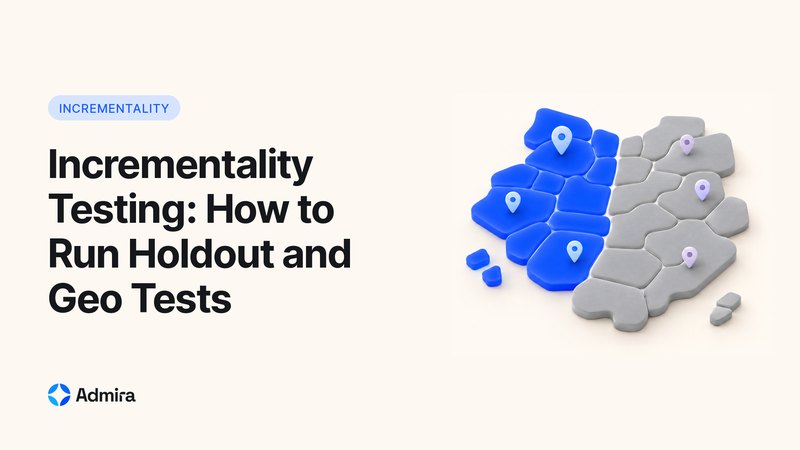
Pick matched markets, run the channel in the test regions only, and compare sales against the holdout regions. This is the closest thing to proof these channels allow, and it is how sophisticated brands justify seven-figure CTV budgets to a finance team.
Feed the channel into your marketing mix model
MMM does not care that no click existed; it reads the statistical relationship between spend timing and revenue. This is where podcast and CTV finally get compared on equal footing with paid search and social, instead of losing by forfeit because they lack click paths.
Match the method to the size of the bet
The right measurement depth scales with how much you are spending and how reversible the decision is. Do not run a geo test to validate a $3,000 podcast sponsorship, and do not scale a seven-figure CTV line on survey data alone.
- Small, exploratory buys. Promo codes, vanity URLs, and a post-purchase survey are enough. You only need to know whether the channel shows a pulse before you commit more.
- Growing channels. Add branded-search and direct-traffic trend analysis against a baseline, and start feeding spend into an MMM so you build the history it needs.
- Major line items. Commission a geo holdout for causal proof, and let MMM arbitrate between the tracked signals and the incrementality result. This is the tier where a wrong call costs real money.
Treating every channel with the same heavy method wastes time; treating a large channel with only cheap signals invites an expensive mistake.
What to expect from the numbers
Expect disagreement between methods. Promo codes might explain a small fraction of what the survey suggests, and the survey will disagree with the geo test. That spread is normal and even healthy; the honest read is a range, not a single ROAS figure with false decimal precision. When you present results, show the range and name the method behind each end of it.
Also expect lag. These are consideration channels that plant a seed and wait, so measuring a two-week podcast flight on day ten mostly measures your own impatience. Give the channel a fair window before you judge it, and re-measure once branded search and MMM have had time to register the effect.
Admira brings these methods into one system — multi-touch attribution, marketing mix modeling, and geo lift testing side by side — so podcast, CTV, and every other click-less channel get measured on equal footing with paid search and social. If those channels are stuck in your “unprovable” column, book a demo and see them scored in one view your finance team will trust.
FAQ
Are post-purchase surveys reliable enough to base decisions on?
They are directionally reliable when the question is simple and placed on the confirmation page. Respondents misremember, and recent touchpoints get over-reported, so use surveys to detect presence and rough scale rather than exact ROI. Combined with promo codes and MMM, a survey that consistently names a channel is strong evidence that channel is doing real work.
What is the minimum spend to justify a geo lift test?
There is no fixed dollar figure. You need enough spend that the expected sales effect is detectable above your regional revenue noise, which depends on your volatility more than a threshold. If the channel is a rounding error in your budget, skip the test and rely on promo codes, surveys, and MMM. Reserve geo tests for channels big enough that a wrong call is expensive.
Do CTV platforms' own conversion numbers mean anything?
They reflect probabilistic household matching within the platform's own attribution window, and they are graded by the seller of the media. That does not make them useless, but it does make them optimistic. Treat a CTV platform's reported conversions as an upper bound, then validate the real effect with a geo holdout or MMM before you scale the budget.
Can small brands measure these channels without a data team?
Yes. Promo codes, vanity URLs, and a one-question post-purchase survey cost almost nothing and require no analysts. Modern measurement platforms have also made MMM accessible without an in-house statistician, so even a lean team can move a podcast or CTV channel out of the unprovable column and into a defensible range.



.svg)
%20(2).png)